
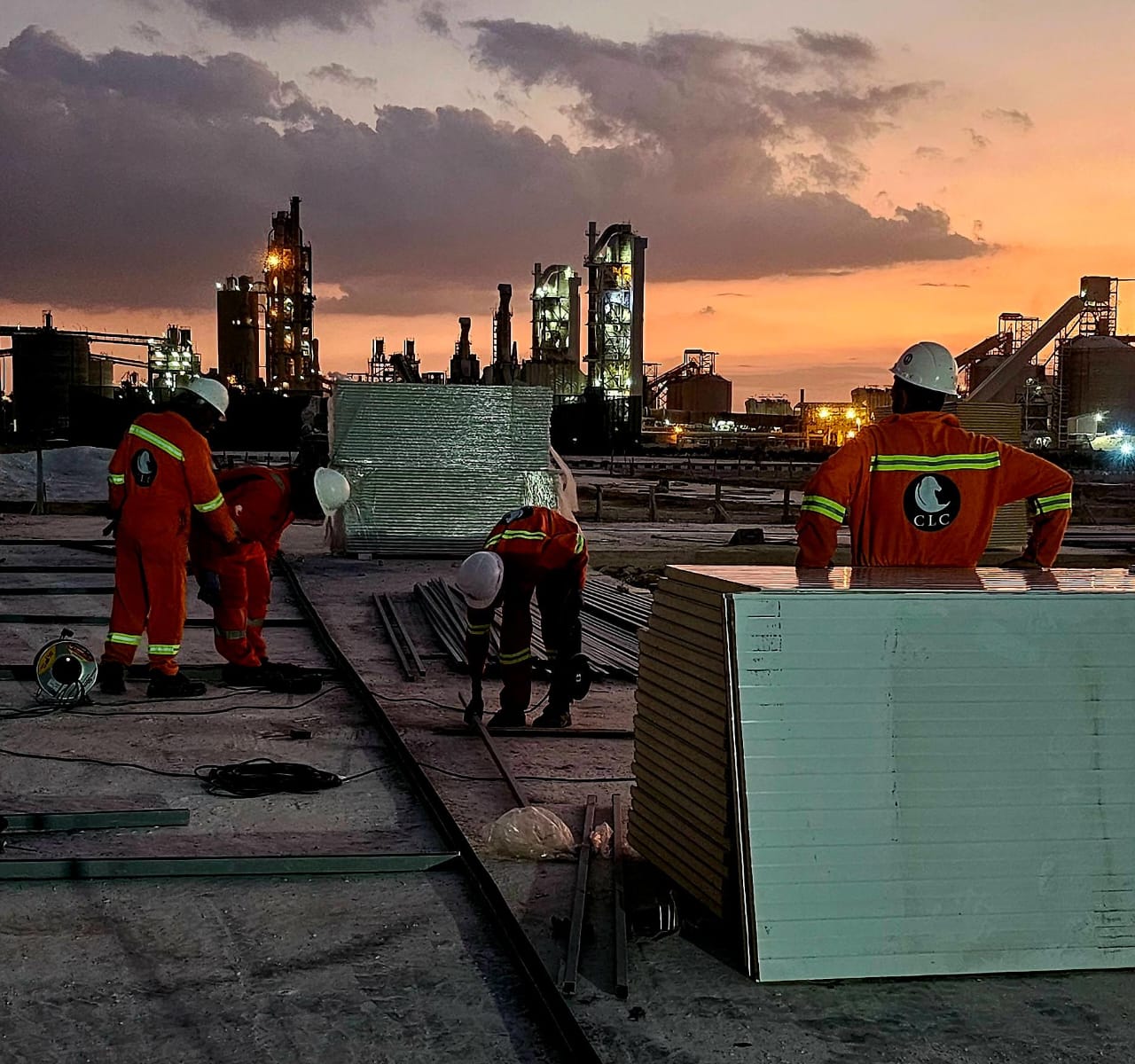
Choosing between fabrication and construction can significantly impact your project’s cost, quality, and completion time. But what is the real difference between the two, and how do you know which approach best fits your industrial project? In this guide, we explore the key differences, practical benefits, and how CLC can support your construction needs in Egypt.
What Is Construction?
Construction is the process of creating, modifying, or renovating buildings, infrastructure, and industrial facilities. It involves coordinating materials, equipment, technical teams, and site activities to transform engineering plans into completed structures.
Depending on the project, construction activities may include:
- Site preparation, excavation, and access road development.
- Foundations and civil engineering works.
- Building construction, renovation, and refurbishment.
- Roads, drainage systems, manholes, and bridges.
- Piping, underground cabling, and related civil works.
- Installation of steel, aluminum, glass, and other building components.
Industrial construction also requires coordination between different disciplines to ensure that structural, mechanical, electrical, and operational requirements are addressed.
For example, constructing an equipment foundation inside a cement plant requires more than pouring concrete. The work must account for equipment loads, positioning, access requirements, and coordination with the surrounding facility.
The main objective of construction is to deliver a functional, stable, and safe structure that meets the project’s approved specifications.
What Is Fabrication?
Fabrication is the process of transforming raw materials, particularly steel and other metals, into finished components or assemblies using specified manufacturing operations.
Instead of producing every component directly at the project site, fabrication allows suitable parts to be manufactured in a workshop or designated production facility before being transported for installation.
Typical fabrication operations include:
- Cutting steel plates, beams, and sections to specified dimensions.
- Bending and shaping materials.
- Drilling, machining, and preparing connections.
- Welding structural components and assemblies.
- Assembling frames, supports, platforms, and guardrails.
- Inspecting finished components before delivery.
Steel fabrication is particularly important in industrial facilities, warehouses, manufacturing plants, and infrastructure projects where structural accuracy and installation coordination are essential.
For instance, a steel access platform can be fabricated according to approved drawings and then transported to the facility for installation. This approach helps organize manufacturing activities before the site team begins the corresponding installation work.
However, fabrication is not limited to steel structures. Its scope depends on the materials, engineering requirements, and intended application.
Fabrication vs. Construction: What Is the Difference?
The difference between fabrication and construction becomes clearer when comparing their roles throughout a project.
| Construction | Fabrication | Factor |
|---|---|---|
| Build or modify structures | Manufacture components | Main purpose |
| Project site | Workshop or production facility | Typical location |
| Civil works, foundations, erection, installation | Cutting, welding, shaping, assembly | Core activities |
| Site execution, alignment, structural integration, and compliance | Dimensions, materials, welds, and component specifications | Scheduling |
| Depends on site readiness and work sequencing | Can often proceed alongside site preparation | Quality controls |
| Completed structures or installed systems | Manufactured components or assemblies | Main deliverable |
For industrial projects that require both component manufacturing and on-site execution, steel fabrication, supply, and installation services can help coordinate the process from fabrication to final installation. This integrated approach helps ensure that fabricated components meet project specifications and are ready for installation when site conditions allow.
Fabrication vs. Construction: Which Is Faster?
The overall project duration depends on the scope of work, design complexity, material availability, site conditions, and coordination between project teams.
Fabrication can help reduce on-site work because components may be manufactured while foundations and other site preparations are underway. Once the site is ready and the fabricated components have passed the required inspections, installation can begin.
Construction timelines, however, depend on several interconnected activities, including civil works, equipment availability, workforce coordination, and installation requirements.
For example, in an industrial warehouse project, steel columns and beams can be fabricated while foundation works are in progress. This parallel workflow may reduce the overall project duration compared with completing each activity strictly in sequence.
However, fabrication does not automatically guarantee faster completion. Delayed drawings, material shortages, design changes, or transportation issues can affect the schedule.
The most efficient approach is to coordinate engineering, fabrication, site preparation, and installation from the beginning of the project.
Fabrication vs. Construction: Which Is More Cost-Effective?
Neither fabrication nor construction is inherently cheaper. The most cost-effective option depends on the project’s technical requirements, production volume, location, installation conditions, and overall scope.
Factors Affecting Fabrication Costs
Fabrication costs may include:
- Raw materials and material preparation.
- Cutting, drilling, welding, and assembly.
- Engineering drawings and fabrication detailing.
- Quality inspections and required testing.
- Surface preparation and protective coatings.
- Transportation and delivery to the project site.
Factors Affecting Construction Costs
Construction costs may include:
- Site preparation and civil works.
- Foundations and structural installation.
- Labor, machinery, and lifting equipment.
- Temporary facilities and site access.
- Coordination with other contractors.
- Testing, inspections, and project completion activities.
Off-site fabrication may help reduce material waste, rework, and installation time. However, transportation, handling, and workshop requirements must also be considered.
Similarly, on-site work may be practical for certain repairs, modifications, or projects where transporting large components is difficult.
To compare options accurately, project owners should evaluate the total cost of materials, fabrication, transportation, installation, inspections, and potential delays rather than comparing individual activities in isolation.
What Are the Main Benefits of Fabrication in Construction?
Fabrication offers several advantages when it is properly planned and coordinated with construction activities.
Improved Accuracy
Manufacturing components according to approved engineering drawings and specifications helps achieve the required dimensions and connection details.
This is particularly important for steel structures where multiple components must fit together during installation.
More Controlled Quality
Fabrication facilities can provide controlled working conditions and dedicated inspection procedures. Depending on the project, these may include material verification, dimensional checks, weld inspections, and surface preparation inspections.
Site installation still requires separate checks to confirm that the components are assembled and installed correctly.
Better Schedule Coordination
Fabrication can often proceed alongside site preparation, allowing project teams to complete different activities in parallel.
This can be particularly beneficial for industrial facilities, warehouses, and steel structure projects with clearly defined designs and delivery schedules.
Potentially Reduced Material Waste
Detailed cutting plans and organized material handling can help optimize raw material use and reduce avoidable waste.
The actual savings depend on the design, material specifications, production planning, and opportunities to reuse suitable offcuts.
Greater Flexibility for Custom Components
Fabrication allows components to be produced for specific structural, industrial, and operational requirements, including steel platforms, equipment supports, frames, and access structures.
Complex designs may require additional engineering, specialized equipment, and more extensive inspection procedures.
When Should You Choose Fabrication or Construction?
The right approach depends on what your project requires. In many cases, fabrication and construction are complementary activities rather than competing alternatives.
When Is Fabrication the Right Choice?
Fabrication is particularly suitable when:
- Your project requires custom steel components or assemblies.
- Components must meet specific dimensions and connection requirements.
- Manufacturing can take place before the installation site is ready.
- The design and engineering drawings have been sufficiently developed.
- Controlled production and inspection processes are important.
When Is Construction the Main Requirement?
Construction is the primary focus when the project involves:
- Site preparation, excavation, and foundations.
- Civil engineering and building works.
- Roads, drainage, and underground infrastructure.
- Structural erection and equipment installation.
- Renovation, refurbishment, or site-specific modifications.
When Should You Combine Fabrication and Construction?
Combining both approaches is often practical for industrial plants, warehouses, manufacturing facilities, and infrastructure projects.
For example, an industrial facility may require civil foundations, fabricated steel platforms, piping supports, and structural installation. Fabrication prepares the required components, while construction activities prepare the site and integrate those components into the completed facility.
This coordinated approach can improve workflow efficiency, reduce scheduling conflicts, and support consistent quality across different project stages.
How Do Fabrication and Construction Work Together?
In a typical industrial steel structure project, fabrication and construction follow a coordinated sequence.
Engineering and planning
The project team reviews the approved drawings, specifications, dimensions, connections, and site requirements.
Material preparation and fabrication
Steel components are cut, drilled, welded, and assembled according to the approved design and applicable quality requirements.
Site preparation
Civil works and foundations are completed, and the site is prepared for the planned installation activities.
Transportation and delivery
Fabricated components are identified, protected, and delivered according to the project schedule and lifting requirements.
Installation and erection
Qualified personnel install the components using suitable equipment and approved procedures.
Inspection and verification
The installed structure is checked against the approved drawings and project specifications. Any required corrective work is completed before handover.
The exact sequence varies by project. Effective coordination between engineering, fabrication, and construction teams helps minimize interface issues and avoid unnecessary rework.
How to Choose a Fabrication and Construction Contractor
Selecting a contractor requires evaluating more than the quoted price. The contractor’s technical capabilities, experience, quality procedures, safety practices, and project coordination approach can all affect the final result.
Before making a decision, consider the following factors:
- Technical expertise: Can the contractor work according to the approved drawings and project specifications?
- Relevant experience: Has the team handled similar industrial, commercial, or infrastructure projects?
- Quality assurance: Are material verification, inspection, and documentation procedures clearly defined?
- Health and safety: Are fabrication, lifting, welding, and site installation activities managed appropriately?
- Project coordination: Can the contractor coordinate fabrication schedules, delivery, and site installation?
- Scope clarity: Does the proposal clearly identify the materials, fabrication work, transportation, installation, and exclusions?
- Schedule and resources: Does the contractor have the necessary workforce, equipment, and production capacity?
A clearly defined scope of work makes it easier to compare proposals, identify missing activities, and establish realistic expectations before the project begins.
Fabrication and Construction Services for Industrial Projects in Egypt
Modern industrial projects often require a seamless integration of engineering fabrication, civil works, structural steel installation, and supporting construction activities. Determining the right service scope depends on facility requirements, technical specifications, and execution schedules.
Capital Leading Company (CLC) delivers fully integrated construction solutions for industrial and infrastructure applications. Beyond general civil works, CLC offers specialized expertise in steel structure fabrication, supply, and installation—ensuring your project is executed with maximum efficiency, precision, and structural integrity.
Why Choose Capital Leading Company (CLC) for Your Project?
The success of any industrial project relies on precision, strict compliance with international standards, and timely delivery. Here is why CLC is the ideal partner for your next project:
- Strict ISO Quality Standards: We operate under certified ISO Quality Management Systems across all fabrication and construction stages. This rigorous quality control minimizes rework, ensures tight dimensional tolerances, and guarantees full compliance with project specifications.
- Uncompromised Health, Safety & Environment (HSE): Safety is at the core of our operations. We enforce stringent safety protocols during factory fabrication, heavy lifting, welding, and on-site erection to protect workers and maintain risk-free project sites.
- End-to-End Project Integration: By coordinating the entire sequence—from detailed shop drawings and workshop fabrication to transport and site assembly—we eliminate interface delays, optimize costs, and streamline overall completion schedules.
- Proven Engineering Expertise: Our technical teams and skilled labor bring extensive hands-on experience in managing complex industrial projects, backed by strict inspection and testing procedures from manufacturing to final handover.
Contact CLC today to discuss your project requirements, technical specifications, and the best execution strategy tailored to your operational needs.
Frequently Asked Questions
What is the difference between fabrication and construction?
Fabrication creates steel parts and components off-site in a controlled factory, while construction sequence-assembles them on-site into the final building. Combining both optimizes timeline and guarantees high structural quality.
Is fabrication part of construction?
Yes. Fabrication is often an important part of construction projects, particularly those involving steel structures. Fabricated components are subsequently transported and installed as part of the overall project.
What is a fabricator in construction?
A fabricator in construction is a specialized contractor or manufacturer who cuts, shapes, welds, and assembles raw materials (like steel) into precise structural components in a controlled workshop. These pre-made components are then transported to the job site for quick and accurate installation.