
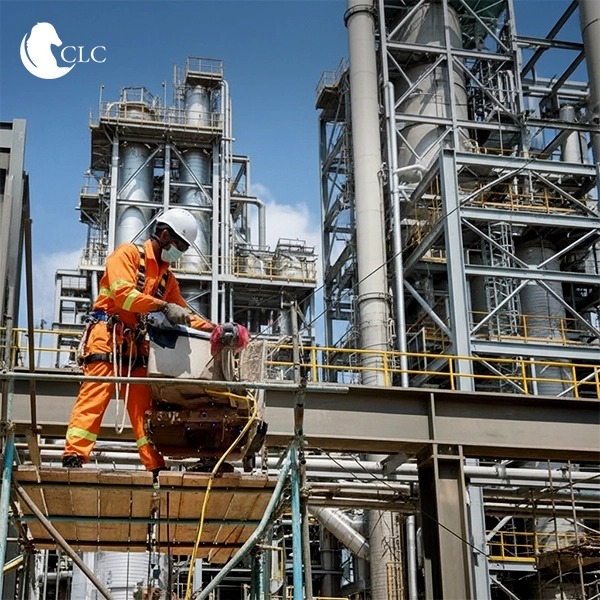
Ensure maximum safety, efficiency, and uptime with professional overhead crane maintenance services in Egypt. At Capital Leading Company – CLC, we help factories, construction sites, warehouses, and industrial facilities maintain their overhead cranes in perfect condition.
Mechanical failures, electrical issues, or worn components can halt production, cause accidents, and lead to costly repairs.
This article explains overhead cranes, their importance, types, uses, and why professional maintenance from CLC is the smart choice for your industrial operations.
What Is an Overhead Crane?
An overhead crane is lifting equipment designed to move heavy loads horizontally and vertically across a workspace. It usually consists of:
- Bridge
- Runway
- Trolley
- Hoist
- Control system
Installed above the workspace, overhead cranes allow efficient load movement without taking up floor space.
Why Are Overhead Cranes Important?
Overhead cranes are essential for industrial operations because they:
- Increase productivity and workflow
- Reduce manual labor and worker fatigue
- Enhance workplace safety
- Allow precise load positioning
- Lower long-term operational costs
Without proper maintenance, these benefits disappear, and operations can suffer costly downtime.
Types of Overhead Cranes
Understanding crane types is essential for proper maintenance:
1.Bridge Cranes
- Most common in factories and workshops
- Moves along elevated runways
- Can handle very heavy loads, up to 320 tons
2.Gantry Cranes
- Supported by legs, ideal for outdoor areas
- Often used in ports, construction yards, and steel plants
3.Jib Cranes
- Rotates around a fixed point
- Used for local lifting tasks in confined areas
4.Monorail Cranes
- Moves loads along a single beam
- Ideal for repetitive linear operations
5.Workstation Cranes
- Light-duty, ergonomic cranes
- Used for small, repetitive tasks in production lines
- Common Applications of Overhead Cranes
Overhead cranes are widely used in:
- Manufacturing plants
- Steel and metal industries
- Cement factories
- Warehouses and logistics centers
- Shipyards and ports
- Power plants
- Construction projects
Their versatility makes them critical for heavy-duty industrial operations.
What Is Overhead Crane Maintenance?
Overhead crane maintenance is a structured process to ensure safety, reliability, and long-term performance. It includes:
- Preventive maintenance
- Corrective maintenance
- Predictive maintenance
- Routine inspections
- Load testing
- Component replacement
- Documentation and compliance checks
Why Preventive Maintenance Matters
- Preventive maintenance helps reduce:
- Unexpected breakdowns
- Safety hazards
- Production downtime
- Emergency repair costs
Identifying and fixing issues early protects your workforce and your investment.
Key Components That Require Regular Maintenance
1. Electrical Systems
Control panels, wiring, limit switches, and sensors
Check for wear, corrosion, and faults
2. Mechanical Parts
Gears, bearings, couplings, and shafts
Lubrication and wear inspections
3. Hoist System
Wire ropes, chains, drums, hooks, and brakes
4. Structural Elements
Girders, welds, bolts, supports
Check for cracks, deformation, or corrosion
5. Safety Devices
Emergency stops
Overload protection
Warning alarms
Overhead Crane Maintenance Checklist
- Daily Inspections
- Visual inspection
- Check hooks and latches
- Test brakes
- Inspect wire ropes
- Listen for unusual sounds
- Monthly Inspections
- Lubrication of moving parts
- Electrical testing
- Brake adjustment
- Structural checks
- Annual Inspections
- Load testing
- Full system evaluation
- Non-destructive testing
- Compliance certification
Why Professional Maintenance Is Essential
DIY or untrained maintenance can miss hidden defects. Certified professionals use:
Advanced diagnostic tools
Load testing equipment
Industry standards and protocols
Safety procedures
This reduces liability risks and ensures compliance.
Why Choose CLC for Overhead Crane Maintenance?
Capital Leading Company (CLC) provides comprehensive overhead crane maintenance services in Egypt to maximize safety, uptime, and operational efficiency.
CLC offers:
- Preventive & corrective maintenance
- Certified inspections
- Spare parts supply
- On-site support
- Emergency response
- Third-party certification assistance
- Customized service plans
Learn more about CLC services Overhead Cranes and Lifting Equipment in Construction
Overhead cranes are part of a broader lifting equipment ecosystem, including:

over head crane
- Mobile cranes and telescopic cranes
- Forklifts and telehandlers
- Aerial work platforms
Proper maintenance ensures continuous operations and worker safety.
What is Lifting Equipment in Construction?
Heavy Equipment Rental in Egypt
For short-term or temporary projects, renting heavy equipment offers:
- Financial flexibility
- Ready-to-use maintained equipment
- Reduced risk of unexpected breakdowns
Check equipment rental options
Frequently Asked Questions
1. How to maintain an overhead crane?
- Inspect electrical and mechanical systems
- Lubricate moving parts
- Check hoist and brakes
- Perform load tests
- Document all inspections
2. What is the maintenance of a crane?
- Weekly or monthly servicing depending on usage
- Lubricating moving parts
- Checking hydraulic, fuel, and coolant levels
- Inspecting brakes and limit switches
3.How often should overhead cranes be serviced?
Routine servicing every 3–12 months depending on usage
Daily pre-start checks recommended
4. What are the 7 types of maintenance?
- Preventive
- Reactive
- Corrective
- Condition-based
- Predictive
- Routine
- Prescriptive
5. How to inspect an overhead crane?
Approach crane and perform visual check
Power on crane
Test hoist down and up functions
Test trolley travel and bridge travel
6. How to take care of a crane?
Routine maintenance: oiling and lubricating
Checking brakes and limit switches
Verifying all connections are secure
7. What is the 1 cause of death in crane accidents?
Over 60% are due to workers being struck by loads, highlighting the importance of proper maintenance.