Working at Height and Confined Space Rescue is one of the most critical safety practices in high-risk industries, where a single mistake can cost lives. As workplaces become more complex and hazards more unpredictable, companies must ensure their teams are properly trained and fully prepared for emergencies.
With the right rescue planning and certified professionals on site, organizations can prevent accidents, protect workers, and maintain safe, uninterrupted operations.
Common Risks of Working at Height
Working at height requires the utmost caution and adherence to safety procedures, as common risks include:
- Falls due to unstable surfaces
- Incorrect use of safety harnesses or PPE
- Weather hazards such as wind or rain
- Poorly installed anchor systems
- Lack of proper supervision or rescue plans
Working at Heights Training
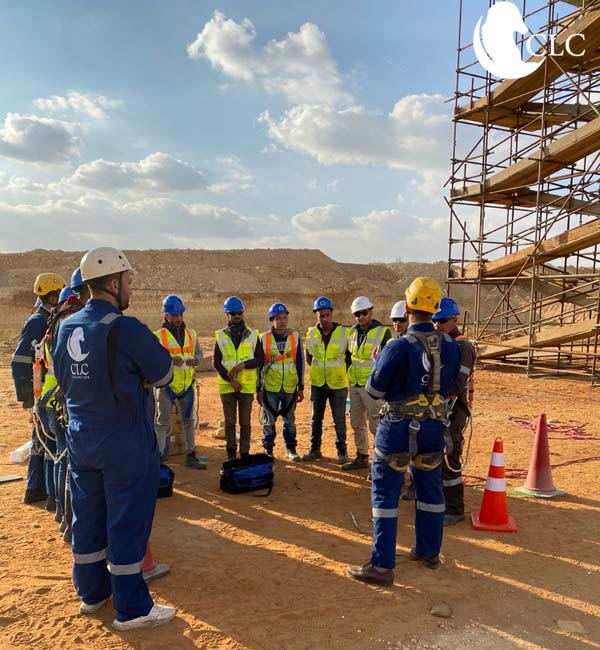
Working at Heights Training is one of the essential elements for ensuring a safe work environment according to the highest global standards. Working at heights is considered one of the most hazardous tasks in the contracting sector, requiring specialized skills and thorough knowledge of safety procedures to prevent accidents and injuries.
Working at height rescue training at Electrotharwat Company provides specialized programs that equip workers with the knowledge and skills necessary to handle emergencies safely. Therefore, CLC Company is committed to offering training programs aimed at qualifying workers and enhancing their awareness of best practices to protect themselves while performing work at heights.
Why Rope Access Is the Safest Working-at-Height Method?
Compared to scaffolding or cranes, rope access is:
- More flexible
- Faster to deploy
- Cost-effective
- Environmentally low-impact
- Extremely safe when done by trained professionals
This is why Capital Leading Company provides certified rope access solutions that guarantee safe access to high and difficult-to-reach areas.
What Is a Confined Space?
A confined space is any enclosed area with:
- Limited entry and exit
- Poor ventilation
- Potential hazardous gases
- Risk of engulfment or entrapment
- Examples include:
- Tanks
- Boilers
- Sewers
- Pipelines
- Underground chambers
- Silos
Work inside confined spaces requires strict permits, the use of Gas Testing Equipment for Confined Space, and an emergency rescue plan before entry.
Major Hazards Inside Confined Spaces
To ensure operational safety, entry and rescue teams must be fully aware of these key, often unseen, hazards:
- Oxygen deficiency
- Toxic or flammable gases
- Heat stress
- Poor visibility
- Risk of collapse or entrapment
Statistics show that most confined space fatalities happen to would-be rescuers with no proper training which highlights the need for certified rescue teams.
Why Confined Space Rescue Teams Are Essential?
A rescue plan isn’t optional it’s a legal requirement in most countries.
A professional confined space rescue team provides:
- Continuous atmospheric monitoring
- Entry supervision
- Standby rescue technicians
- Proper lifting and retrieval systems
- Emergency evacuation procedures
Capital Leading Company supplies fully trained and certified rescue teams following global safety standards.
Key Safety Measures for Working at Height & Confined Spaces
Implementing these four foundational measures is non-negotiable for protecting personnel and ensuring regulatory compliance in high-risk environments.
Risk Assessment
A full analysis of hazards before any task begins.
Permit to Work (PTW)
Required to ensure controlled and safe entry.
Proper PPE
Safety harnesses, lifelines, gas detectors, ventilation systems, and communication tools.
Emergency & Rescue Plan
Must be prepared and approved before any worker enters a confined space or elevated area.
Professional Training Makes the Difference
Training is the backbone of workplace safety.
Capital Leading Company provides internationally recognized courses, including:
Working at Height Training
- Safe climbing and positioning
- Use of fall protection Installation Lifeline Systems
- Hazard identification
- Rescue techniques
Confined Space Entry & Rescue Training
- Permit systems
- Gas testing
- Safe entry procedures
- Emergency rescue operations
These programs ensure your team is fully compliant with global occupational safety standards.
Why Choose a Capital Leading Company?
Capital Leading Company is a leader in rope access, working-at-height safety, and confined space rescue solutions. Organizations trust us because we provide:
- Certified professional technicians
- Advanced rescue systems
- Industry-level training programs
- Compliance with OSHA & international safety standards
- Fast response and professional project execution
Whether you need training, rescue planning, or full rope-access support, our team delivers unmatched safety and quality
Prioritizing Working at Height and Confined Space safety is the most vital investment your company can make for operational continuity. Certified training, meticulous rescue planning, and global compliance are the non-negotiable pillars of success. Partner with Capital Leading Company (CLC) today to leverage our certified expertise and secure your future operations..
Frequently Asked Questions
What is a life line for work at height?
A lifeline is a flexible or rigid line that connects the worker to anchor points. It is used either vertically or horizontally and serves as the essential means of connection for other fall protection equipment.
What is a Confined Space Rescue?
Confined space rescue is a technical operation focused on the rescue and recovery of victims trapped in, or only accessible through, a confined space. This includes areas like underground vaults, storage silos, storage tanks, or sewers.