
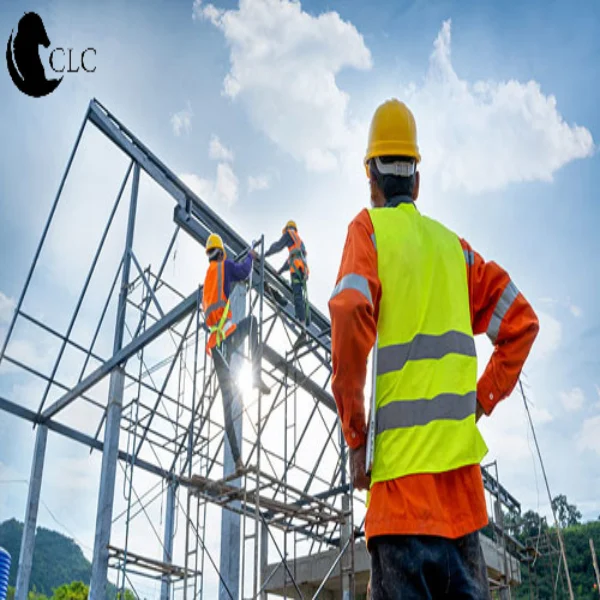
Working at height remains one of the leading causes of serious workplace accidents and fatalities across many industries. Falls from roofs, ladders, scaffolding, or fragile surfaces can result in severe injuries if proper safety measures are not in place. Implementing effective Working at Height Safety practices helps organizations protect workers, reduce risks, and comply with international safety standards. Understanding the correct equipment, procedures, and training requirements is essential for maintaining a safe working environment.
Protect your team and improve workplace safety with professional Working at Height Safety training from CLC (Capital Leading Company). Contact us today to learn about our specialized courses and safety solutions designed for industrial environments.
What Should Employers Do Regarding Working at Height Safety?
Employers must ensure that any work performed at height is properly planned, supervised, and carried out by competent professionals with the required skills, knowledge, and experience.
Using the correct equipment for working at height is also essential to minimize risks and maintain a safe work environment.
Companies should take a proportionate approach to risk management. Low-risk tasks may require simple safety precautions, while complex tasks demand detailed planning and advanced safety measures.
CLC provides professional training programs that help organizations implement international safety practices for working at height.
Get in touch with us today to train your team and improve workplace safety.
Control Measures for Working at Height Safety
Before any work at height begins, companies must conduct a proper risk assessment. Factors that should be considered include the height of the task, the duration and frequency of the work, and the condition of the working surface.
Organizations should follow these essential steps:
- Avoid working at height whenever possible.
- If working at height cannot be avoided, prevent falls by using safe workplaces or appropriate equipment such as guardrails, safety nets, and Lifeline Fall Protection Installation systems.
- When the risk cannot be completely eliminated, minimize the distance and consequences of a fall by using proper fall protection systems such as harnesses and lifelines.
It is always important to prioritize collective protection measures before individual protection.
Best Practices for Working at Height Safety
To ensure the safety of workers and reduce the risk of falls, organizations should follow these recommended best practices when performing work at height.
Do:
- Perform as much work as possible from ground level.
- Use scaffolding systems instead of ladders whenever possible.
- Ensure workers can safely access and exit elevated work areas.
- Use equipment that is stable, suitable, and regularly inspected.
- Take precautions when working near fragile surfaces.
- Protect workers and equipment from falling objects.
- Plan emergency rescue procedures in advance.
Through CLC training programs, employees gain practical knowledge on how to safely work at height and prevent accidents.
Don’t:
- Overload ladders with equipment or materials.
- Overreach while standing on ladders or stepladders.
- Lean ladders against weak surfaces such as plastic gutters or fragile walls.
- Use ladders for heavy or long-duration tasks.
- Allow untrained personnel to perform work at height.
CLC safety courses help companies train workers to avoid dangerous practices and maintain safe working conditions.
Equipment Used for Working at Height
Many workplace accidents occur due to improper use of access equipment or work platforms. Therefore, it is important to select the appropriate equipment and ensure that workers are properly trained in its safe use.
Some of the most commonly used equipment and methods include:
Mobile Access Towers
Workers must descend before the tower is moved to another location.
Mobile Elevating Work Platforms (MEWPs)
Fall protection systems must always be used when operating these platforms.
Suspended Access Platforms
Used in specialized situations such as maintenance work on tall buildings.
Portable Ladders
These should only be used for short-duration, light tasks.
Fixed Ladders
These should be used with fall arrest systems and anchor lines according to international safety standards.
Rope Access Services
Rope Access Services allow trained technicians to safely access difficult or high locations using ropes, harnesses, and specialized safety equipment. This method is commonly used for inspection, maintenance, cleaning, and installation work on tall structures.
Why Working at Height Training is Critical
Proper safety training significantly reduces workplace accidents and ensures compliance with international safety regulations.
Capital Leading Company (CLC) provides professional training in:
- Working at Height Safety
- Confined Space Safety – Confined Space Entry (CSE)
- Emergency Response
- Rescue Operations
- Industrial Safety Management
Our training programs are designed to help companies build safer workplaces and protect their workforce.
Enroll your team today in CLC’s certified safety training programs and elevate your organization’s safety standards.
Contact CLC for Working at Height Safety Training
If your organization is looking to improve workplace safety and prevent fall-related accidents, CLC is here to help.
Our experts provide professional training, consultation, and safety solutions tailored to your industry needs.
Contact Capital Leading Company (CLC) today and take the first step toward a safer workplace.
Frequently Asked Questions
What is a safe working height?
Work at Height refers to any task where a worker could fall and be injured if proper safety measures are not in place. According to OSHA, work at height starts at 4 feet in general industry and 6 feet in construction.
What are the safety measures of work at height?
Ensure equipment is suitable, stable, and strong enough for the job, and that it is maintained and checked regularly. Take precautions when working on or near fragile surfaces, provide protection from falling objects, and consider emergency evacuation and rescue procedures.