
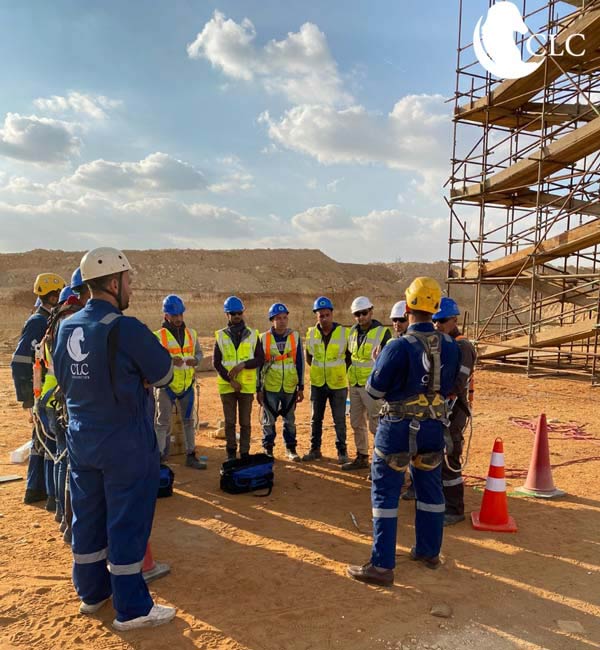
Work at Height Safety Training with CLC ensures your team stays safe while working at elevated sites. Don’t wait for accidents to happen – protect your workers now by booking your training with CLC today
Falls from height are one of the leading causes of injuries and fatalities in construction, maintenance, and industrial environments. Even a small misstep, an unsteady ladder, or unsecured equipment can have serious consequences.
Why Your Team Needs Work at Height Safety Training
With proper training, your team will:
- Identify and avoid hazards
- Use safety equipment correctly
- Respond confidently in emergency situations
- Maintain compliance with international safety standards
Don’t risk your team’s safety – secure your training with CLC now
Who Should Take This Training?
This training is designed to ensure that anyone working at heights has the skills and knowledge to stay safe and protect others.
Target Participants
Work at Heights Training is essential for:
- Construction site workers
- Maintenance and installation technicians
- Project engineers
- Safety supervisors
- Emergency and rescue teams
- Contracting companies and factories
Even personnel who work at heights for short periods must undergo training to ensure their safety and the safety of others. This training can also complement specialized programs such as Confined Space Entry (CSE) for workers exposed to restricted or hazardous areas.
What the CLC Training Program Includes
The CLC Training Program is designed to equip participants with the knowledge and practical skills needed to ensure their safety when working at heights.
Understanding Height Safety Equipment
Participants learn about:
- Scaffolds: types and proper setup
- Ladders: safe usage
- Safety harnesses and anchor points
- Fall protection systems
- Rescue tools
Hands-on exercises often include Fall Arrest Systems to show workers how to prevent falls using certified equipment.
Proper Use of Safety Gear
Many accidents occur despite having safety equipment—because it’s used incorrectly. Participants learn to wear and adjust harnesses correctly, secure themselves safely on anchor points, and move safely on elevated surfaces.
Training also covers systems like Life Line Systems to provide continuous protection on rooftops, towers, and elevated work areas, and highlights the best suppliers of Personal Protective Equipment (PPE)
to ensure workers have access to high-quality gear.
- Wear and adjust harnesses correctly
- Secure themselves safely on anchor points
- Move safely on elevated surfaces
- Avoid common mistakes in equipment use
Emergency Response and Rescue
A critical part of the training focuses on emergency situations:
- How to respond to a fall
- First aid techniques
- Safe evacuation
- Using rescue systems
The program references practical scenarios including Working at Height Rescue Training at Electrotharwat Company to simulate real emergencies and build confidence.
Risks Minimized by This Training
This training helps participants identify and mitigate the most common risks associated with working at heights, ensuring a safer work environment
Falls from Heights
Falls are the most common cause of serious injuries. Training teaches proper anchoring, equipment inspection, and safe work practices. Workers also learn advanced safety techniques from programs such as Rope Access Window Cleaning, which emphasize controlled movement and fall prevention.
Falling Tools
One unsecured tool from above can cause serious injury or death. Training includes proper securing, storage, and use of safety nets.
Electrical Hazards
Working near electricity at heights is extremely dangerous. Training covers isolation procedures, personal protective equipment, and safe handling of exposed wiring.
Harsh Weather Conditions
Strong winds, rain, extreme heat, or cold increase accident risks. Training teaches how to assess weather conditions, take protective measures, and know when to postpone work.
Fatigue and Concentration Loss
Long hours at heights increase the risk of errors. Training includes break management, focus techniques, and strategies to reduce fatigue-related risks.
Work at Height Safety Training with CLC equips your team with practical skills and certified safety knowledge to prevent accidents at elevated sites. Training covers hazard identification, proper equipment use, and emergency response. Book now with CLC to ensure your workers stay safe and compliant.
Why Choose CLC for Work at Heights Training?
Capital Leading Company is not just a training provider—it’s a partner with real-world site experience.
Benefits include:
- Certified and experienced instructors
- State-of-the-art equipment
- Hands-on training with real-life scenarios
- Custom programs tailored to each work environment
- Official certification
- On-site or center-based training
Real-World Case Study
CLC has conducted hands-on rescue and height safety training at major industrial sites.
This ensures that the training is not just theoretical it’s built on practical, real-world experience.
Training Availability Near Cairo
CLC offers:
- Work at Heights Training near Cairo
- On-site training at your project
- Custom programs according to site needs
Training also integrates hazard prevention systems such as:
– Life Line System,
– Fall Arrest Systems,
– Rope Access Window Cleaning protocols for full-site safety.
Book Your Training Now – Protect Your Team
Workplace safety isn’t optional it affects productivity, compliance, and reputation.
Contact us today to secure your training spot and ensure a safe work environment.
Frequently Asked Questions
What is Work at Heights Training?
A comprehensive program to prepare workers to operate safely at elevated sites using certified safety equipment and clear procedures.
Who should take this training?
Anyone working at height, including workers, technicians, engineers, supervisors, and emergency teams.
Is this training legally required?
Yes, in most industrial and construction projects, it is a core requirement for compliance and safety.
Does CLC provide training near Cairo?
Yes, training is available in Cairo and surrounding areas, both on-site and at CLC centers.
Will I receive certification?
Yes, all participants receive an official certificate upon successful completion of the program.